

Herniated Disc & Spinal Decompression Treatment in Medina, OH – Non-Surgical Options Near You
Disc-related pain and nerve symptoms are part of the broader conservative approach we outline on our chiropractic services page.
Back or neck pain that shoots down your arm or leg, changes how you walk, or makes you afraid to move is not “normal.” In many people, these symptoms come from a disc problem irritating a spinal nerve. That does not automatically mean you need surgery, but it does mean you need a serious, structured plan instead of guesswork.

At Lite Force Chiropractic, we provide herniated disc and decompression care for disc-related pain that is appropriate for conservative treatment. Our job is to:
Confirm whether your symptoms match a disc pattern.
Rule out red flags and surgical emergencies.
Build a non-surgical plan that includes decompression only when it actually makes sense.
We commonly see people with:
Low back pain that radiates into the buttock, thigh, calf, or foot
Neck pain that travels into the shoulder, arm, or hand
Electric, burning, or shooting leg or arm pain, sometimes with numbness or tingling
Pain that worsens with sitting, bending, or coughing and improves when walking or lying in certain positions
Weakness, “heaviness,” or loss of endurance in a limb after a back or neck flare
If this describes you, keep reading and then get properly evaluated instead of collecting more random advice.

When a Herniated Disc Is an Emergency
Some disc problems can be managed conservatively. Others require immediate medical attention. You do not start with chiropractic care if you have:
Sudden loss of bladder or bowel control
Numbness in the groin or “saddle” area
Rapidly worsening weakness in one or both legs or arms
Recent major trauma (car crash, fall from height) with severe back/neck and limb pain
Severe back or neck pain with fever, unexplained weight loss, or history of cancer
These are medical emergencies. They belong in the ER or with an emergency spine team, not in any chiropractic office. We become relevant only after serious conditions are ruled out or treated.

What a “Herniated Disc” Actually Means
Your spine has vertebrae (bones) separated by discs that act as shock absorbers. A disc has:
An outer ring of tough cartilage (annulus fibrosus)
An inner gel-like center (nucleus pulposus)
Over time, or under excessive load, discs can:
Bulge (the outer ring pushes outward but is still intact)
Herniate (inner material pushes through a weakened spot in the outer ring)
Extrude or sequester (more severe displacement of disc material)
When disc material or swelling narrows the space around a nerve root, you can develop:
Radicular pain (leg or arm pain following a nerve path)
Numbness or tingling in a defined distribution
Weakness in specific muscles controlled by that nerve
A key point:
Not all disc bulges cause symptoms. Many are found incidentally on MRI.
Not all leg or arm pain is “sciatica” or “pinched nerve.” Some pain is referred from joints or muscles.
At Lite Force Chiropractic, the first step is to determine whether your pattern is:
A true nerve-root problem (radiculopathy),
Referred pain from joints or soft tissues, or
A mix of both.
The plan depends on which of these you actually have.

Why Disc Problems Develop
Disc problems are usually the result of loading over time, plus individual anatomy and recovery capacity. Common contributors include:
Repeated flexion and bending under load (lifting, manual work, poor body mechanics)
Prolonged sitting with poor posture, especially combined with deconditioning
Sudden heavy lifting or twisting, often after a period of inactivity
Degenerative changes (loss of disc height, arthritic facet joints)
Weak or poorly coordinated trunk and hip muscles that force discs and ligaments to absorb excess load
Your MRI, if you have one, shows the structure. Your history and exam show how that structure is being loaded. We pay attention to both.
Our Evaluation Process for Disc Herniation in Medina, OH
A real disc-management plan starts with a real evaluation. During your initial visit, we typically follow this process:
1. Detailed History
Exact onset of symptoms: sudden event vs gradual onset
Pain location and radiation pattern (back/neck and limb)
Positions and movements that worsen or relieve symptoms
Coughing, sneezing, or straining effects
Any changes in strength, balance, coordination, or endurance
Previous episodes, imaging, injections, or surgeries
Work demands, sport activity, and general health history
2. Physical and Neurological Examination
Observation of posture, alignment, and gait
Active and passive range of motion of the spine and related joints
Palpation of spinal segments, muscles, and relevant joints
Neurological screening:
Strength testing in key muscle groups
Reflexes (e.g., knee, ankle, biceps, triceps)
Sensation along dermatomal patterns
3. Nerve Tension and Functional Testing
Straight-Leg Raise / Slump tests (for lumbar disc patterns)
Upper-limb tension tests (for cervical disc patterns)
Functional tasks such as sit-to-stand, walking, stairs, and directional preference movements
The goal is to map how nerve structures respond to movement and load, not just whether a disc looks abnormal on a scan.
4. Imaging and Referral Criteria
We do not send every patient for an MRI. We recommend imaging when:
Red-flag signs/symptoms are present or suspected
There is significant or progressive neurological deficit
Pain is severe and persistent despite a reasonable trial of conservative care
A surgeon or pain specialist would need imaging to make a decision about injections or surgery
When your presentation suggests that surgery or interventional care may be needed, we say it plainly and help you move toward appropriate specialists instead of pretending manipulation or decompression can solve everything.
Herniated Disc & Spinal Decompression Treatment Options in Medina, OH
Your care plan at Lite Force Chiropractic is built around calming the irritated nerve, optimizing mechanics, and gradually rebuilding capacity. Spinal decompression is one tool within that plan, not the entire plan.
1. Spinal Decompression (Non-Surgical Traction)
Spinal decompression therapy uses a computer-controlled traction table to gently distract the spine in specific positions. Intentions:
Reduce pressure within the disc
Improve fluid exchange and nutrient flow
Create conditions for disc material and inflammation to irritate the nerve less
Key points:
Sessions are typically brief and repeated over several weeks.
Parameters (angle, force, cycle duration) are adjusted based on your tolerance and response.
It is not appropriate for everyone. We screen for this.
Decompression is used when your history, exam, and response to positioning suggest that carefully controlled traction is more likely to help than harm.
2. Chiropractic Adjustments and Mobilization
When segments above or below the disc level are stiff or dysfunctional, they can overload the injured area. Where indicated, we use:
Manual adjustments to improve motion in hypomobile segments
Low-force mobilization if high-velocity manipulation is not appropriate or not tolerated
Goals:
Normalize joint mechanics
Decrease protective muscle guarding
Improve the distribution of load through the spine
If your presentation or imaging makes manipulation unsafe or unwise, we do not do it. There is no mandatory “cracking” requirement.
3. Targeted Exercise and Directional Preference Work
Disc-related pain often has a directional preference. We identify and use that bias as part of treatment.
Your plan can include:
Directional movements that centralize or reduce symptoms
Activation of deep trunk stabilizers and hip muscles
Gradual reintroduction of loaded movements (hinge, squat, push, pull, carry)
Specific strategies tied into broader spine planning, including back pain treatment and sciatica care
You are given clear instructions on frequency, intensity, and progression instead of vague “do your exercises” advice.
4. Soft-Tissue and Myofascial Therapy
Disc problems often create secondary muscle spasm and myofascial pain. We may apply:
Manual trigger-point therapy
Myofascial release
Instrument-assisted techniques over paraspinals, glutes, hips, and related regions
These methods help reduce surrounding pain and improve your ability to move into corrective positions and exercises.
When appropriate, we may integrate:
Cold laser therapy as an adjunct for pain modulation and tissue support
Postural correction to address chronic loading patterns
Custom orthotics when lower-limb mechanics clearly influence spinal loading
Again, these are support tools. They are only effective within a coherent mechanical and loading strategy.
What Recovery Actually Looks Like
Every disc case is different, but a realistic pattern looks like this:
Acute Phase – Calm the Fire
Reduce pain and nerve irritation
Find positions that centralize or decrease symptoms
Maintain as much safe activity as possible instead of total bed rest
Subacute Phase – Restore Movement and Strength
Expand the range of tolerable movement
Introduce and progress strengthening and endurance work
Reduce reliance on passive care; you do more, we do less
Reintegration Phase – Build Capacity for Real Life
Reintroduce lifts, carries, rotation, impact, and job/sport-specific tasks under control
Address posture, ergonomics, and conditioning so you do not repeat the same overload pattern
Maintenance / Monitoring (Optional)
Some patients choose periodic check-ups
Others are discharged with a clear self-management plan
If your progress stalls or deteriorates despite appropriate care, we reassess and, if indicated, recommend further imaging or referral.

Self-Care Principles for Disc-Related Pain
This is not a substitute for individual advice, but basic principles apply:
Avoid complete inactivity. Prolonged bed rest generally worsens stiffness and deconditioning.
Use positions that reduce symptoms.
Respect pain, but do not fear all movement.
Break up sitting. Short, frequent movement breaks are non-negotiable.
Follow the plan, not your mood.
Any self-care move that creates new weakness, sensory loss, or bladder/bowel issues is unacceptable—seek immediate medical evaluation.
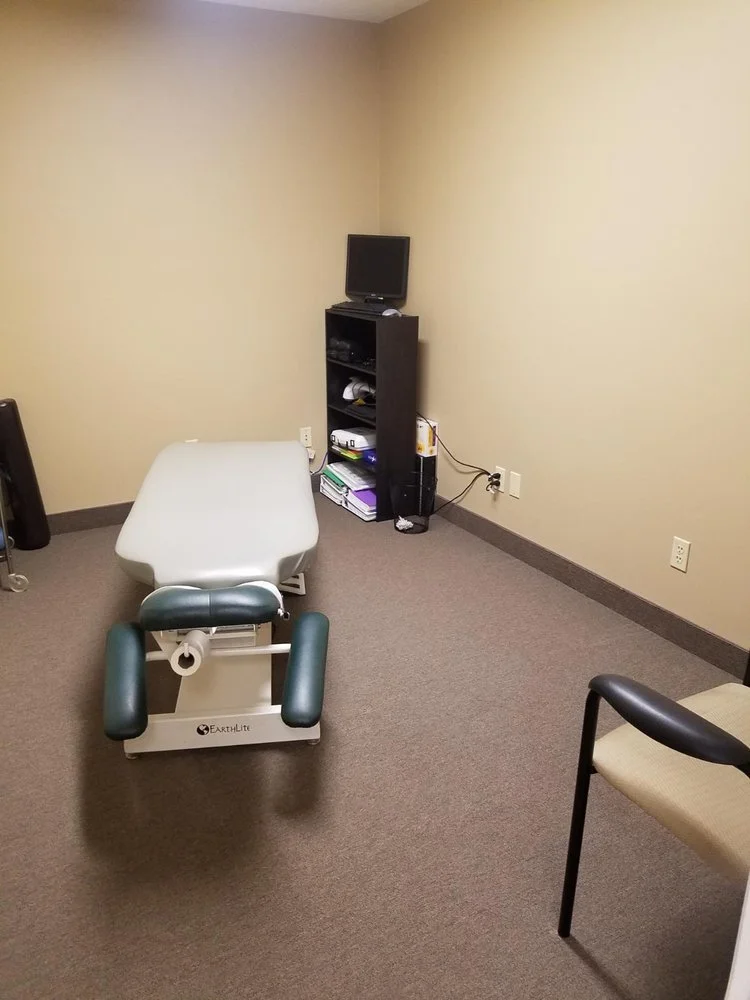
How Lite Force Chiropractic Positions Itself in Disc Care
Around Medina, you see a mix of:
Template decompression pages that sell a table rather than a plan
Region clinics talking about disc herniation but not Medina-focused
Hospital systems that are excellent when you need imaging, injections, or surgery, but offer little detailed guidance on conservative spine care
Lite Force Chiropractic is built to occupy a very specific slot:
Local conservative disc care with clear triage and referral boundaries
Real assessment, not just “free screening” sales funnels
Decompression used when appropriate, not forced on everyone
Integration with related services including:
You get a plan designed to match your disc problem and risk profile, not a one-size-fits-all protocol.
Frequently Asked Questions About Herniated Disc & Spinal Decompression Treatment
-
No. Many disc herniations improve with time and conservative care. Surgery is generally considered when there is severe or progressive neurological deficit, cauda equina features, or persistent disabling pain despite an adequate trial of non-surgical management.
-
For appropriately selected patients, non-surgical decompression is generally well tolerated. It is not suitable for everyone. We screen for these factors before recommending it.
-
Applied correctly, manipulation is one tool among many for some disc patients. In cases where risk or irritability is high, we modify the technique or avoid manipulation altogether.
-
Some patients notice improvement within days to weeks. Others require longer timelines. During your evaluation, we outline realistic expectations based on your findings.
-
Not necessarily. If your case meets criteria where MRI would change management, we will recommend it and collaborate with your medical team.
Schedule Herniated Disc & Spinal Decompression Treatment in Medina, OH
If you are dealing with back or neck pain that radiates into your arm or leg and suspect a disc problem, you do not need another vague “watch and wait” month without a plan.
At Lite Force Chiropractic, we provide structured conservative care with clear criteria for when surgery or interventional care is the better option.
You can find us as disc herniation chiropractor near me in Medina, OH.
To get started, request an appointment to schedule your disc evaluation.
Location
Lite Force Chiropractic
4087 Medina Rd Suite 400, Medina, OH 44256, United States